
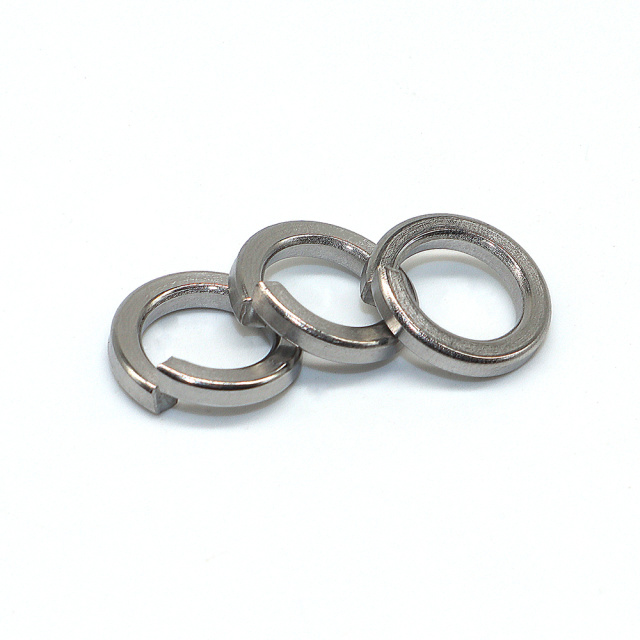
Bolt loosening is one of the most common causes of mechanical failure. Vibration, thermal cycling, and dynamic loads can all cause fasteners to back off over time. Here are 7 proven methods to keep your bolts tight.
Why Bolts Loosen
Bolts loosen when the preload (clamping force) decreases. This happens through:
- Vibration: Lateral movement causes threads to rotate loose
- Embedding: Surface roughness flattens under load, reducing tension
- Thermal cycling: Different expansion rates between bolt and joint materials
- Creep: Gasket or material relaxation over time
Method 1: Prevailing Torque Lock Nuts
These nuts have a deformed section or nylon insert that creates friction resistance. They stay in place without additional hardware and are reusable (nylon inserts up to 10 times).
Method 2: Nylon Insert Lock Nuts
A nylon ring at the top of the nut creates interference with the bolt threads. Effective up to 120°C. Common in automotive and appliance applications.
Method 3: Flange Nuts
Integrated washer face distributes load and increases friction under the nut. Serrated flange versions bite into the surface for extra security.
Method 4: Thread-Locking Adhesives
Liquid adhesives (Loctite-style) fill thread gaps and cure to lock the fastener. Available in different strengths:
- Low strength (purple): Instrument screws, adjustable assemblies
- Medium strength (blue): General purpose, removable with hand tools
- High strength (red): Permanent, requires heat to remove
Method 5: Nord-Lock Washers
Wedge-locking washers with cams that create tension instead of friction. They cannot loosen because any rotation increases the clamp load. Ideal for critical structural and safety applications.
Method 6: Tab Washers and Safety Wire
Traditional methods still used in aerospace and racing. Tab washers bend against the nut flat. Safety wire connects multiple fasteners so loosening one tightens another.
Method 7: Proper Torque and Re-torque
Correct initial torque prevents embedding loosening. Re-torque after 24-48 hours for critical joints. Use torque-angle method for most consistent results.
Choosing the Right Method
- Low vibration: Proper torque + flange nuts
- Medium vibration: Lock nuts or thread-locking adhesive
- High vibration: Nord-Lock washers or safety wire
- High temperature: All-metal lock nuts (no nylon)
- Requires disassembly: Medium strength adhesive or prevailing torque nuts
Chaoshuo Trading – We supply all types of locking fasteners including nylon insert lock nuts, flange nuts, and serrated washers. Contact us for recommendations.