
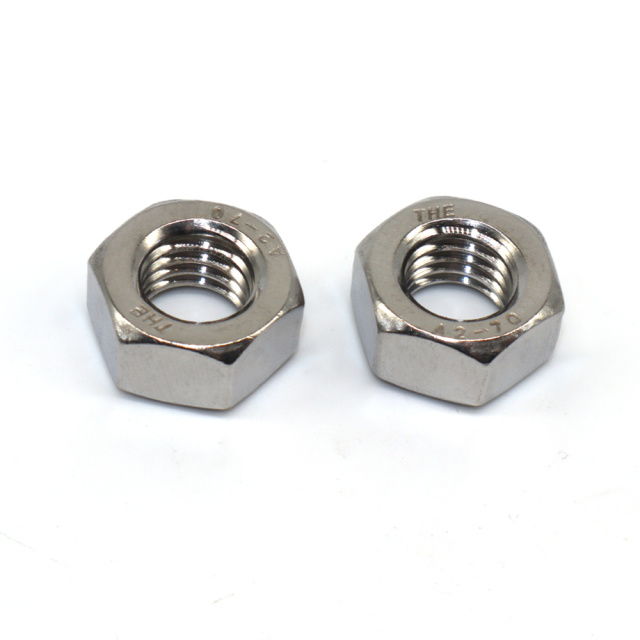
Nuts are just as important as bolts in a fastened joint. The wrong nut can lead to loosening, stripped threads, or joint failure. This guide helps you select the right nut for every application.
Hex Nuts (DIN 934 / ISO 4032)
The standard nut for general applications:
- Used with hex bolts, studs, and threaded rods
- Available in all grades (4, 8, 10, 12)
- Material: carbon steel, stainless steel, brass
- Coatings: zinc, hot-dip galvanized, plain
Use when: Standard bolted connections, general purpose
Hex Jam Nuts (DIN 439 / ISO 4035)
Thin version of hex nuts:
- Half the height of standard hex nuts
- Used as lock nuts in double-nut systems
- Lower clamping force than standard nuts
Use when: Locking against a standard nut, limited space, adjustment applications
Nylon Insert Lock Nuts (DIN 985 / DIN 982)
Self-locking nuts with nylon collar:
- Nylon insert creates friction to prevent loosening
- Reusable up to 10 times (depending on temperature)
- Temperature limit: 120°C (250°F)
- Available in thin (DIN 985) and thick (DIN 982) versions
Use when: Vibration resistance needed, moderate temperatures, reusable locking
All-Metal Lock Nuts
Prevailing torque nuts without nylon:
Toplock Nuts (DIN 25201)
- Top section deformed to create locking action
- All-metal construction for high temperatures
- Reusable multiple times
- Temperature limit: 300°C+ (depending on material)
Distorted Thread Nuts
- Thread distorted at top or center
- Creates interference fit
- High temperature capability
Use when: High temperature applications, engine components, exhaust systems
Flange Nuts (DIN 6923 / ISO 1661)
Integrated washer face:
- Wide flange distributes load
- Eliminates need for separate washer
- Serrated versions bite into surface for locking
- Non-serrated for smooth surfaces
Use when: Sheet metal, soft materials, vibration resistance (serrated), space saving
Wing Nuts (DIN 315)
Hand-tightenable nuts:
- Wing-shaped ears for hand tightening
- No tools required
- Low torque capacity
- Type 1: cold forged (low strength)
- Type 2: die cast zinc (medium strength)
- Type 3: stamped steel (low strength)
Use when: Frequent assembly/disassembly, light loads, tool-free access
Cap Nuts (DIN 1587 / ISO 8732)
Acorn nuts with domed top:
- Covers exposed bolt threads
- Professional appearance
- Protects threads from corrosion
- Prevents injury from sharp thread ends
Use when: Visible fasteners, safety (cover sharp ends), decorative applications
T-Nuts (DIN 1624)
For T-slot applications:
- Slide into T-slots in machine tables
- Provide clamping point anywhere along slot
- Used with bolts to clamp workpieces
Use when: Machine shops, CNC tables, modular framing systems
Coupling Nuts (DIN 6334)
Long nuts for joining rods:
- Full body length (6x diameter)
- Used to join two threaded rods end-to-end
- Create long continuous threads
Use when: Extending threaded rods, tie rods, tension rods
Material and Grade Selection
Carbon Steel
- Grade 4: Low strength, general purpose
- Grade 8: Medium strength, structural
- Grade 10: High strength, critical connections
- Grade 12: Highest strength, heavy-duty
Stainless Steel
- A2-70 (304): General corrosion resistance
- A4-80 (316): Marine and chemical resistance
Alloy Steel
- Grade 10 and 12: Heat treated for high strength
- Chrome-moly: High temperature applications
Matching Nuts to Bolts
General rules:
- Nut grade should match or exceed bolt grade
- Nut material should be compatible with bolt material
- For high-temperature service, consult manufacturer guidelines
- Stainless steel nuts on stainless steel bolts only
Torque Considerations
- Use proper torque for nut grade and size
- Apply lubricant if specified
- Tighten in star pattern for multi-bolt joints
- Re-check torque after initial loading
Chaoshuo Trading – Complete range of nuts in all types, sizes, materials, and grades. From standard hex nuts to specialty lock nuts, we have what you need. Contact us for fastener solutions.