
Washers are essential components in bolted joints, yet often overlooked. The right washer prevents damage, distributes load, and can even prevent loosening. Here is your complete guide.
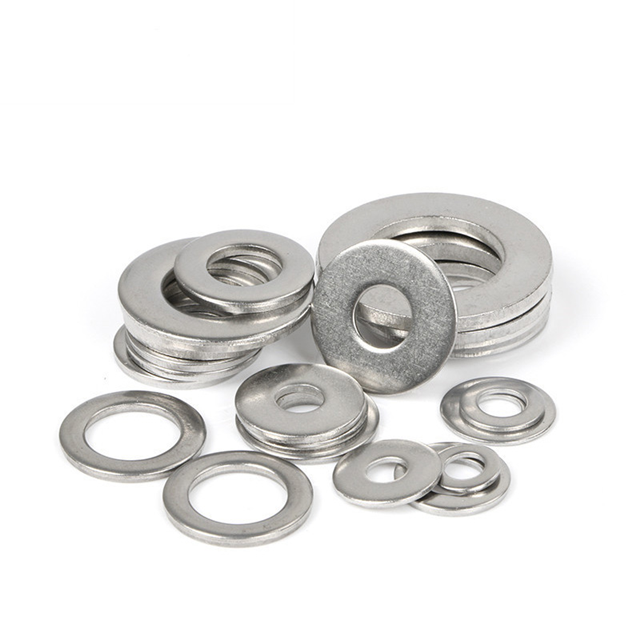
Flat Washers (DIN 125 / ISO 7089)
The most common washer type. Functions:
- Distribute bolt load over larger area
- Protect surfaces from damage during tightening
- Compensate for oversized holes
- Provide smooth bearing surface
Used in virtually all bolted connections. Available in steel, stainless steel, and non-metallic materials.
Fender Washers (DIN 9021)
Extra-large outer diameter relative to the hole. Used where:
- Load must be spread over a wide area
- Material is soft (wood, plastic, thin sheet metal)
- Hole is oversized or elongated
Spring Washers (DIN 127)
Split ring washers that provide spring tension:
- Prevent loosening from vibration
- Maintain preload under dynamic loads
- The sharp edges bite into nut face and joint surface
Note: Studies show split washers are less effective than other locking methods for high-vibration applications.
Lock Washers – Tooth and Star
Internal or external teeth that bite into the fastener and joint surface. Excellent for:
- Small fasteners and electronics
- Sheet metal assemblies
- Applications where rotation must be prevented
Belleville Washers (Disc Springs)
Cone-shaped washers that provide high load capacity in compact spaces:
- Compensate for thermal expansion differences
- Maintain preload under temperature cycling
- Used in flanged connections and pressure vessels
- Can be stacked in series or parallel for different spring rates
Wave Washers
Provide light spring tension in low-load applications. Common in electronics, instruments, and light machinery.
Cup Washers (DIN 25201)
Deep-drawn washers that enclose the bolt head. Used for:
- Clean appearance in visible assemblies
- Protecting bolt heads from damage
- Sealing against dust and moisture
Material Selection
- Carbon steel: General purpose, zinc plated
- Stainless steel: Corrosive environments
- Brass: Electrical conductivity, marine
- Nylon: Insulation, chemical resistance, light loads
- Phosphor bronze: Spring applications, marine
When to Use Washers
- Always under the turning element (usually the nut)
- When joint surface is soft or easily damaged
- When holes are oversized
- When using locking features (spring washers, tooth washers)
- In structural connections per engineering specifications
Chaoshuo Trading – Complete range of flat, spring, lock, and specialty washers in all standard sizes. Contact us for your washer requirements.